
A washing machine is a ten-year decision. Which means the ₹6,000 saved by picking the wrong type isn't a saving — it's a small discount on a decade of mild irritation.
The good news is that the choice is genuinely determined by your circumstances rather than by which machine is objectively best. Once you know your water supply, your floor, your household size and how much you care about fabric care, the answer usually picks itself.
The three formats
Front load
What's better: a noticeably cleaner wash, gentler treatment of fabric, substantially less water used, and higher spin speeds — which means clothes come out drier and need less drying time. That last point matters enormously during monsoon.
What's worse: higher purchase price, much longer cycles (often 90 minutes to two hours), a need for a level floor and reasonably steady water pressure, and you can't add a forgotten item mid-cycle once the door locks. Loading requires bending, which some people dislike more than they expect.
Best for: households that wash regularly, care about clothes lasting, and have a reliable water connection.
Top load, fully automatic
What's better: cheaper, much faster cycles, easy loading without bending, tolerant of variable water pressure, and you can usually add a stray sock after starting.
What's worse: uses considerably more water, is rougher on delicate fabrics, and generally spins slower so clothes come out wetter.
Best for: households wanting speed and convenience, homes with less predictable water supply, and anyone who finds bending difficult.
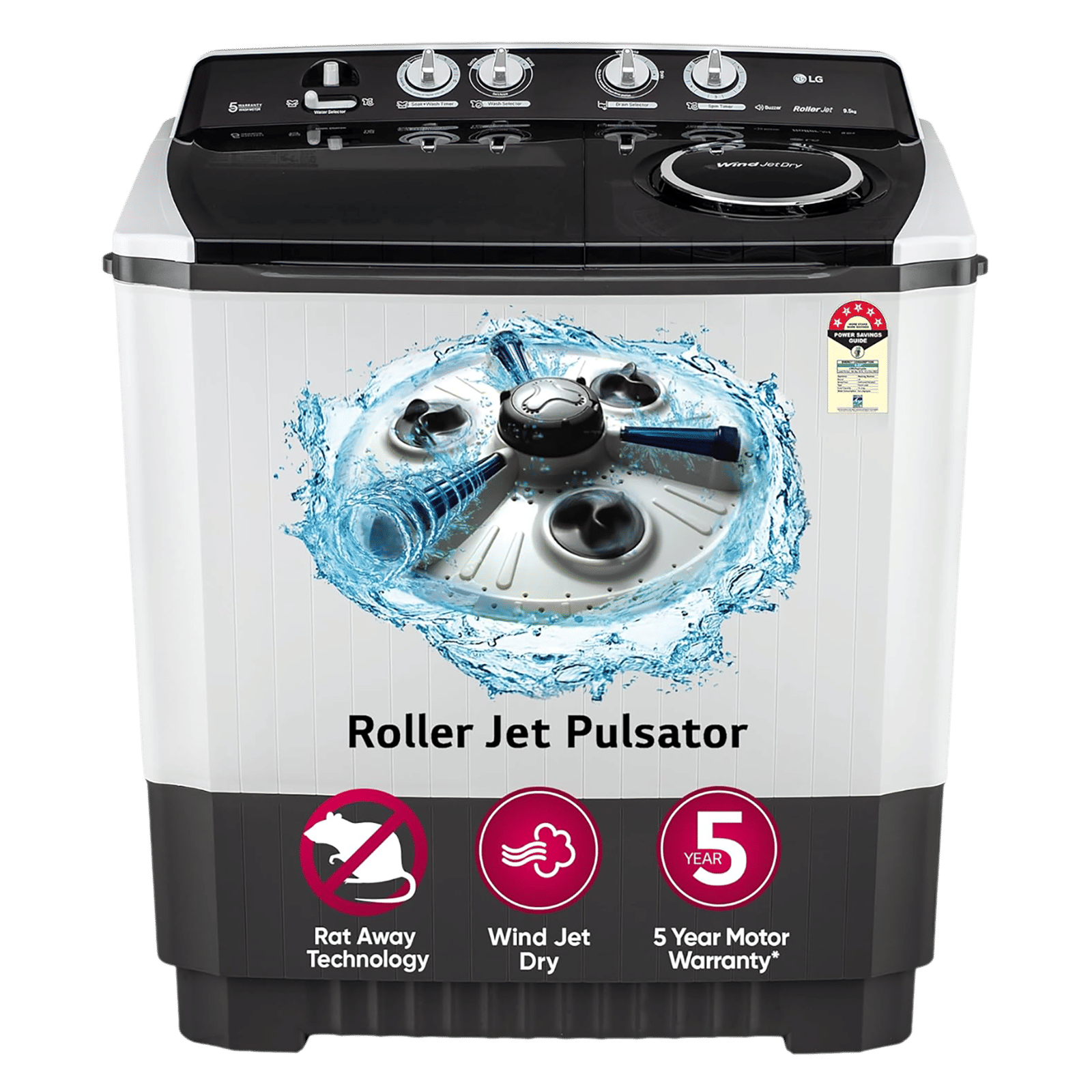
Semi-automatic
What's better: cheapest to buy and to run, works with bucket filling when the supply is unreliable, uses less electricity, and is simple enough to repair almost anywhere.
What's worse: you move the clothes between the wash tub and the spin tub yourself, so it needs your presence throughout.
Best for: irregular water supply, tight budgets, and households where someone is around during the wash anyway. It's a genuinely rational choice that gets dismissed as outdated, and it remains the lowest total cost of ownership by a wide margin.
Capacity, matched to the household
Rough guidance:
- 1–2 people → 6 to 6.5 kg
- 3–4 people → 7 to 7.5 kg
- 5 or more, or frequent bedding and curtain washing → 8 kg and above
One size up is usually worth it — it lets you wash bedsheets and heavy items comfortably, and running a slightly under-filled machine occasionally costs little. Two sizes up is waste, because water and power consumption scale with the machine, not with what you put in it, and you'll be running half-empty loads for a decade.
The specific thing worth checking: whether a double bedsheet fits comfortably. That single use case determines the right capacity for a lot of households more than the number of people does.
The specifications that matter
Spin speed (RPM). Higher means drier clothes leaving the drum, which means less drying time. 1000+ RPM is a genuine quality-of-life difference during monsoon or in a flat without much drying space. This is the specification most worth paying for in Indian conditions.
Inverter motor. Quieter, more efficient, usually carries a longer motor warranty. Worth the premium on a machine you'll run several times a week.
Warranty split. Brands advertise the longest number, which is almost always the motor warranty. What matters more is the comprehensive warranty covering everything else — the electronics and the drum assembly are what actually fail. Compare comprehensive against comprehensive.
Hard water tolerance. If you're in a hard-water city, scaling on the heater and drum is the main long-term threat. Some machines handle it better, and using the right detergent quantity matters more than people think — excess detergent in hard water leaves residue that shortens machine life.
Wash programmes. Most machines advertise a dozen or more; most households use three. Don't pay a premium for programme count. Do check that the ones you'll actually use exist: a quick wash, a heavy/bedding cycle, and a delicate cycle.
The installation details that catch people out
Space, including the door swing. Measure the alcove, then measure again allowing for the door opening on a front loader and the lid opening upward on a top loader. A machine that fits the space but can't open properly is a genuine and surprisingly common problem.
Floor level and stability. Front loaders spin fast and vibrate hard. An uneven floor produces a machine that walks across the room. Levelling feet handle small variation; a badly uneven floor needs fixing first.
Water inlet and drainage. Check you have an inlet tap within reach and a drainage point at an appropriate height. Retrofitting either after delivery is a plumber's visit you didn't budget for.
Hot water inlet. Some machines have one, which saves electricity if you have a geyser nearby. Not essential, but useful if the plumbing already exists.
Running costs, which nobody compares
Two machines with the same price can differ noticeably in what they cost to operate, and over ten years that difference is real money.
Water. A front loader typically uses substantially less water per cycle than a top loader — often around half. If you're on a metered supply or a tanker, that's a direct saving. If water is effectively free where you live, it matters less, though it still affects how long a fill takes.
Electricity. Most consumption goes into heating water, so machines used on cold-wash cycles cost far less to run regardless of rating. If you rarely use hot washes, don't overpay for heating efficiency you won't use. If you wash hot regularly, the star rating earns its premium.
Detergent. Front loaders need low-foam detergent formulated for them, which costs more per wash than ordinary powder — but they also use less of it per cycle. Roughly a wash. Worth knowing so the first shopping trip after delivery isn't a surprise.
Service and parts. Genuinely worth checking before buying: whether the brand has authorised service in your city, and what a typical out-of-warranty repair costs. A cheaper machine from a brand with no local service presence is expensive the first time something fails, and something eventually fails.
Common mistakes worth avoiding
Buying on capacity alone. A large drum with a slow spin and a weak motor is worse than a smaller, better machine.
Ignoring the noise. In a flat, particularly one where the machine sits near a bedroom, spin noise matters. Reviews mention it consistently when it's a problem.
Skipping the demo. Most installations include a demonstration cycle. Watch it, ask what the error codes mean, and find out how to clean the filter — that one piece of knowledge prevents the most common service call.
Overloading. Consistently overfilling produces poor washing and shortens the machine's life. If you're regularly cramming loads in, the machine was a size too small.
Timing and price
Appliance prices soften after the summer peak and again during the festive sales, when outgoing models are cleared. New model years arrive with modest feature changes and a fresh price premium — so the previous year's model, still in warranty and still supported, is usually the best value on the shelf.
The other timing consideration is practical rather than financial: buying during a peak period means longer waits for delivery and installation. Buying in a quiet month means the installation happens when you want it to.
Comparing across stores properly
Large appliances have some of the widest store-to-store spreads in retail, for two reasons: the absolute prices are high, so a few percent is a lot of money; and what's included varies.
Three things to normalise before comparing:
- Delivery and installation. Included at one store, charged at another. Standard installation on a washing machine is usually simple, but confirm rather than assume.
- Old-appliance exchange. Values differ meaningfully between platforms for the same old machine, and it comes straight off the price.
- Extended warranty bundling. Sometimes included in a higher price, sometimes sold separately. Compare like with like.
And the usual discipline: compare the exact model number, not the model family. Manufacturers sell near-identical machines under codes differing by one character, with different spin speeds or capacities. The listing title will not reliably tell you which one you're looking at.
Searching the full model string on 7Compare matches that specific machine across the stores carrying it, so you're comparing the same capacity and the same spin speed rather than three similar-sounding variants. The installation and exchange terms still need reading — but only on the two cheapest listings, which is thirty seconds of work.
The short version
Choose the format from your water supply, your floor and how much you care about fabric care — not from which is theoretically better. Size for your bedsheets, not just your headcount. Pay for spin speed and an inverter motor; ignore the programme count. Compare comprehensive warranty rather than motor warranty. Normalise installation and exchange before comparing prices.
Get that right and you'll barely think about the machine again for ten years, which is the actual goal — nobody wants a relationship with their washing machine.